

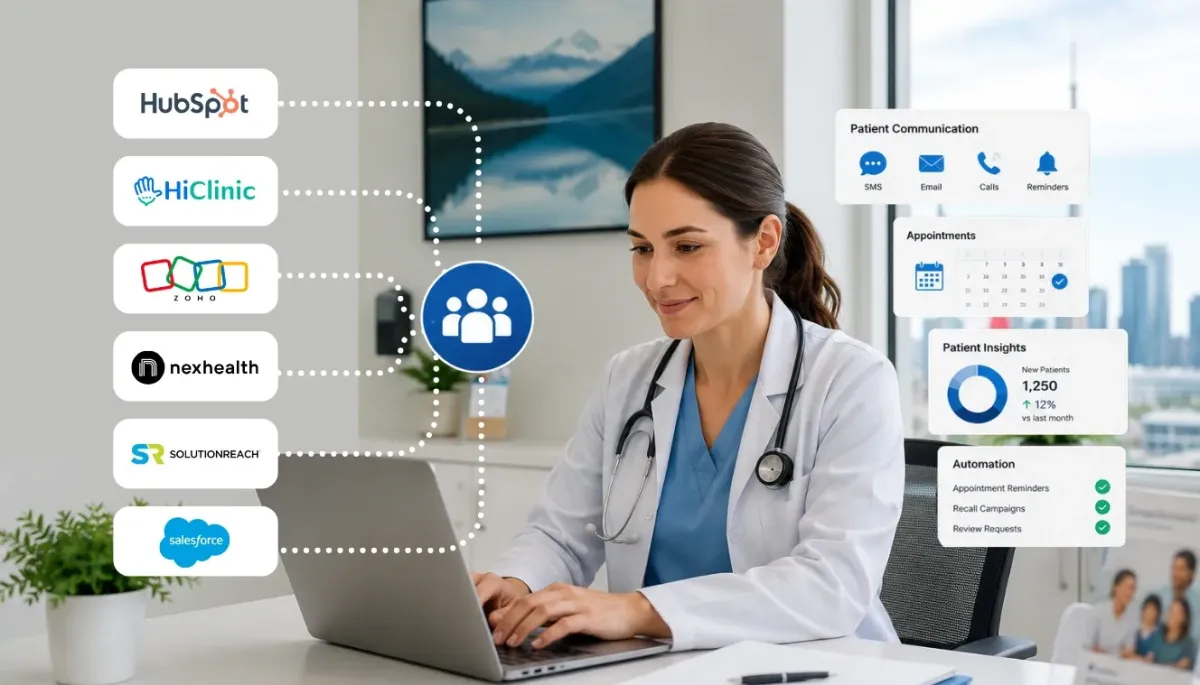
Best Healthcare CRM Software for Patient Management in 2026
Most clinics don’t lose patients because they provide poor care. They lose them because communication breaks down. A missed call goes unanswered. A follow-up never gets sent. A patient forgets their appointment. Another one leaves after their first visit and never returns.
These small gaps create big problems over time.
Many healthcare providers invest in traditional CRM systems hoping to solve this, only to realize most platforms simply store patient data instead of helping clinics improve communication and retention.
They need systems that help them:
Manage patient relationships
Automate follow-ups
Reduce no-shows
Improve retention
Streamline front-desk operations
This blog covers the best healthcare CRM software for patient management and what healthcare providers should look for before choosing one.
What Is Healthcare CRM Software?
Healthcare CRM software helps providers manage patient interactions throughout the patient journey.
Unlike traditional CRMs built for general sales teams, healthcare CRMs focus on improving communication between clinics and patients.
These platforms typically help providers manage:
Appointment scheduling
Patient communication
Follow-ups
Reminders
Retention campaigns
Lead tracking
Patient inquiries
Many clinics are now investing in healthcare CRM platforms to create smoother patient experiences.
The goal is simple.
Make it easier for patients to book appointments, stay engaged, and return for future care.
Why Clinics Need Better Patient Management Systems in 2026
Patient expectations have changed.
People want fast communication and convenient scheduling.
They don’t want to wait days for callbacks or manually confirm appointments.
At the same time, clinics are dealing with:
Staffing shortages
Rising operational costs
Increased competition
Higher patient volumes
Manual systems slow everything down.
Answering calls
Scheduling appointments
Confirming bookings
Handling reschedules
Following up with patients
That’s why many providers are adopting modern clinic management and healthcare automation platforms to operate more efficiently.
Key Features to Look for in Healthcare CRM Software
Not all healthcare CRM platforms are built the same.
Here are the features that matter most
Appointment scheduling
Patients should be able to book quickly without unnecessary friction.
Automated reminders
Reduce no-shows with automated text, email, or call reminders.
Patient recall tools
Good patient recall software helps bring inactive patients back.
Communication tracking
Clinics should be able to track patient conversations across multiple channels.
Workflow automation
This helps reduce repetitive administrative work.
Many providers now prioritize workflow automation tools to reduce administrative workload.
Review generation
Strong CRM platforms help clinics collect reviews and improve trust.
This supports broader healthcare reputation management software efforts.
AI communication tools
Modern clinics are increasingly adopting:
Automated medical receptionist tools
AI Voice Receptionist for Canadian Healthcare
Secure live chat healthcare support providers
These features help clinics respond faster and capture more opportunities.
Best Healthcare CRM Software for Patient Management in 2026
Salesforce
Best for large healthcare organizations
Salesforce offers highly customizable CRM tools that large healthcare organizations can adapt to complex workflows.
It works well for enterprise healthcare teams that need advanced reporting, automation, and integrations.
Pros:
Highly customizable
Strong analytics
Enterprise integrations
Cons:
Expensive
Requires technical setup
Can feel overwhelming for smaller clinics
Best for hospitals and large healthcare networks.
Zoho
Best for customizable workflows
Zoho offers flexible CRM solutions that healthcare providers can tailor to their specific workflows.
It’s often chosen by smaller to mid-sized clinics looking for affordability.
Pros:
Affordable pricing
Flexible customization
Easy integrations
Cons:
May require manual setup
Healthcare-specific features may need customization
Good option for clinics that want flexibility without enterprise pricing.
HubSpot
Best for patient acquisition
HubSpot works well for clinics focused on lead generation, marketing automation, and patient acquisition.
It helps manage inquiries from websites, ads, and online campaigns.
Pros:
Strong marketing tools
Lead tracking
User-friendly platform
Cons:
Less healthcare-specific
Limited patient retention features
Helpful for clinics focused heavily on growth marketing.
NexHealth
Best for scheduling and patient engagement
NexHealth helps providers streamline appointment scheduling and patient communication.
It’s commonly used by healthcare practices looking to modernize booking systems.
Pros:
Online scheduling
Patient communication tools
Modern user experience
Cons:
Pricing may not fit smaller clinics
Limited broader operational tools
Strong option for clinics prioritizing appointment scheduling.
Solutionreach
Best for patient communication
Solution reach focuses heavily on communication workflows like reminders, recalls, and patient messaging.
Pros:
Strong communication tools
Reminder automation
Recall campaigns
Cons:
May lack broader growth tools
Interface may feel dated for some users
Good fit for clinics focused on retention.
HiClinic
Best for patient communication automation and retention
This is where HiClinic stands out.
Traditional CRMs often help clinics organize patient information.
HiClinic helps clinics actively grow by automating communication across the full patient journey.
It helps clinics:
Recover missed calls with instant text responses
Automate appointment reminders
Bring inactive patients back through recalls
Collect more reviews
Reduce front desk workload
Convert website visitors into appointments
It also supports clinics looking for:
Automated medical receptionist solutions
AI Voice Receptionist for Canadian Healthcare
best voice AI for healthcare front-desk automation
Instead of acting like another generic CRM, HiClinic helps clinics capture, convert, and retain more patients.
Why Traditional Healthcare CRMs Often Fall Short
Many traditional CRMs do a great job storing patient information.
But storing data is not the same as driving growth.
Clinics still struggle with:
Missed calls
Slow response times
Patient drop-offs
Low review volume
Overworked front desk teams
That’s where many traditional systems fall short.
They organize information but don’t always solve communication problems.
Modern clinics need platforms that actively help improve patient retention and operational efficiency.
Why HiClinic Feels Different
HiClinic focuses on what many healthcare providers actually need.
Better communication.
Faster responses.
Higher retention.
Less administrative stress.
From missed call text-back to patient recall workflows, it helps clinics automate the parts of patient management that often create revenue loss.
That’s why it fits well within the growing demand for:
Healthcare Workflow Automation Software in Canada
Healthcare CRM Software in Canada
Digital Healthcare Solutions in Canada
It helps clinics move beyond basic CRM functionality and build stronger patient relationships.
Conclusion
The best healthcare CRM software in 2026 does more than organize patient records.
It helps clinics build stronger relationships with patients.
That means improving communication, reducing no-shows, bringing patients back for future visits, and making life easier for front desk teams.
While traditional CRM platforms can help manage data, many clinics now need tools that actively support growth.
They need systems that help them:
Capture new patient opportunities
Automate follow-ups
Improve retention
Strengthen their reputation
Reduce operational bottlenecks
That’s why healthcare providers are moving toward smarter platforms that combine CRM capabilities with automation.
The clinics that invest in better patient communication today will be the ones that grow faster in 2026.
Disclaimer
Disclaimer:The content shared by HiClinic is intended for informational and educational purposes only. It is not medical advice, legal advice, or clinical guidance. HiClinic provides automation tools designed to improve patient communication, scheduling, retention, and operational workflows. Results may vary depending on clinic size, processes, and implementation.