

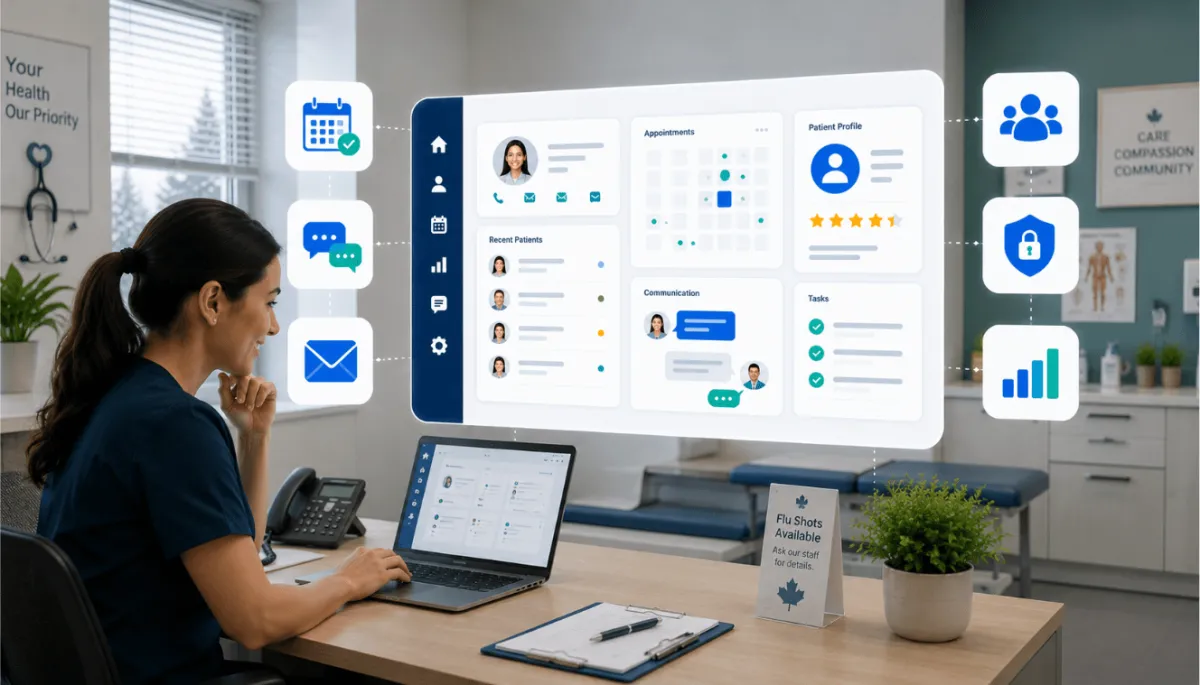
Essential Healthcare CRM Features That Help Your Clinic Grow
Most clinics don’t struggle because they lack patients. They struggle because managing patient communication becomes messy as they grow. Missed calls go unanswered, follow-ups are delayed, appointments are forgotten, and front desk teams spend too much time handling repetitive tasks instead of focusing on patient care.
That’s why choosing the right healthcare CRM matters. The best platforms do more than organise patient records. They help clinics improve communication, reduce no-shows, increase retention, and create smoother patient experiences. For clinics exploring healthcare CRM platforms in Canada, the real difference comes down to features that actually support growth.
What Is a Healthcare CRM?
A healthcare CRM helps clinics manage relationships with patients throughout their entire journey.
It helps providers handle:
Appointment scheduling
Patient communication
Follow-ups
Reminders
Retention campaigns
Lead tracking
Patient inquiries
Unlike traditional CRMs built for general businesses, healthcare CRMs are designed to help clinics improve patient engagement while reducing operational friction.
Many providers are also combining CRM systems with broader digital healthcare tools to create faster, more connected patient experiences.
Why CRM Features Matter More Than Brand Names
A lot of clinics choose software based on brand recognition.
That often leads to expensive mistakes.
A popular CRM may have hundreds of features, but if it doesn’t help your clinic improve communication or retention, it won’t drive growth.
Many providers end up paying for:
Complex dashboards they never use
Unnecessary enterprise tools
Features built for large hospital systems
Software that doesn’t solve day-to-day communication issues
What actually matters is whether the platform helps your clinic:
Book more appointments
Reduce no-shows
Retain patients
Improve efficiency
Reduce front desk pressure
That’s where feature selection becomes far more important than choosing the biggest software brand.
8 Essential Healthcare CRM Features That Help Clinics Grow
Not every feature in a CRM platform will help your clinic grow.
Some features look impressive during demos but rarely get used.
The features below directly impact bookings, retention, patient satisfaction, and operational efficiency.
Easy Appointment Scheduling
If booking an appointment feels complicated, patients may give up and move on to another provider.
A good healthcare CRM should make scheduling simple through:
Online booking
Calendar syncing
Appointment confirmations
Rescheduling options
The easier it is to book, the more appointments your clinic can secure.
This is why many providers look for modern clinic management software with built-in scheduling tools.
Automated Appointment Reminders
No-shows can quietly drain clinic revenue.
Patients often miss appointments because they forget or fail to confirm.
Automated reminders help reduce this problem by sending:
Text reminders
Email reminders
Voice reminders
Patients can confirm, cancel, or reschedule before the appointment.
This keeps schedules full and reduces wasted time.
Patient Recall Automation
Many clinics focus heavily on acquiring new patients while ignoring existing ones.
That creates retention problems.
A strong CRM should include patient recall software that automatically reminds patients to return for:
Annual checkups
Recurring treatments
Follow-up appointments
Preventive care visits
This helps clinics increase repeat visits without manual outreach.
AI Receptionist and Call Handling
Missed calls often mean missed revenue.
Patients call after work, during lunch breaks, or when your front desk is overwhelmed.
If no one answers, many patients move on.
This is why clinics are adopting:
Automated medical receptionist tools
AI Voice Receptionist for Canadian Healthcare
Best voice ai for healthcare front-desk automation
These tools help clinics capture more opportunities while reducing front desk pressure.
Multi-Channel Communication Tools
Patients want communication options.
Some prefer text.
Others prefer email or phone calls.
A modern CRM should support:
SMS
Email
Phone communication
Website chat
This is where secure live chat tools can improve response times and booking conversions.
Review Generation Tools
Online reviews influence patient decisions.
A strong CRM should automatically request reviews after positive appointments.
This helps clinics build trust and supports long-term growth through:
Stronger online visibility
Higher credibility
More patient inquiries
It also supports broader clinic reputation and patient trust strategies.
Reporting and Analytics
Growth becomes difficult when clinics don’t track performance.
CRM platforms should help providers measure:
Appointment volume
No-show rates
Retention rates
Lead conversion rates
Good reporting helps clinics identify operational gaps faster.
Website Integration and Online Booking
Your website should help generate appointments.
A CRM should integrate with your website so patients can book easily without unnecessary friction.
This becomes even more important for clinics investing in healthcare website optimization and online booking experiences.
These features help clinics grow because they solve real operational problems instead of simply organizing patient data.
Features Clinics Often Overpay For
Not every CRM feature is worth paying for.
Many clinics end up investing in software packed with tools they rarely use.
Common examples include:
Overly complex enterprise dashboards
Advanced sales tools designed for non-healthcare businesses
Unnecessary customization features
Complicated reporting systems that require technical support
Bloated software packages with steep learning curves
These features may look impressive during product demos, but they often create more confusion than value.
For most clinics, growth comes from improving patient communication and reducing operational bottlenecks.
Simple, effective automation often delivers better results than overly complicated software.
How HiClinic Helps Clinics Grow Faster
This is where HiClinic takes a different approach.
Instead of functioning like a traditional CRM that simply stores patient information, HiClinic helps clinics automate the parts of patient management that directly impact growth.
It helps clinics:
Capture missed calls with instant text responses
Automate appointment reminders
Bring inactive patients back through recall campaigns
Generate more reviews
Reduce front desk workload
Convert website visitors into booked appointments
From first inquiry to repeat visits, HiClinic helps clinics close the communication gaps that often lead to lost revenue.
It also aligns with growing demand for:
Healthcare Workflow Automation Software in Canada
Digital Healthcare Solutions in Canada
Practice management software Canada
The focus stays on helping clinics capture, convert, and retain more patients.
Conclusion
The right healthcare CRM should help your clinic grow, not create more complexity.
Features like appointment reminders, patient recall tools, AI receptionists, and review automation can make a measurable difference in patient retention and operational efficiency.
Before choosing any platform, focus on the features that solve your biggest communication challenges.
Because better patient communication often leads to better clinic growth.
Disclaimer
Disclaimer: The content shared by HiClinic is intended for informational and educational purposes only. It is not medical advice, legal advice, or clinical guidance. HiClinic provides automation tools designed to improve patient communication, scheduling, retention, and operational workflows. Results may vary depending on clinic size, processes, and implementation.