

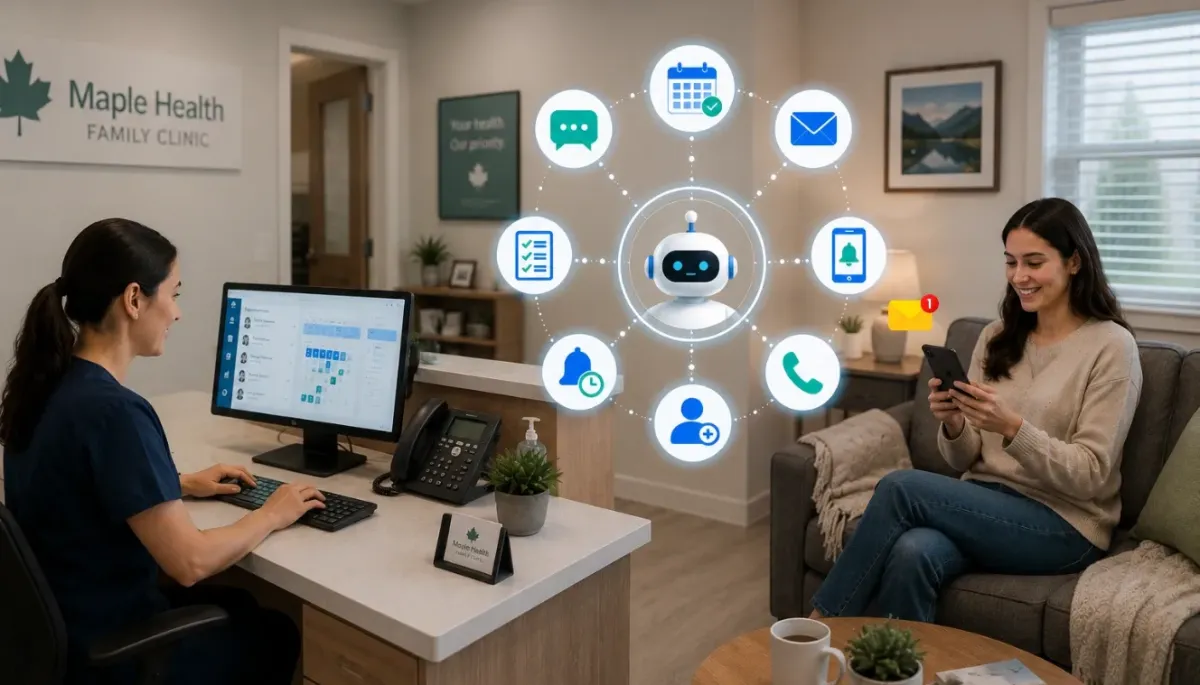
Automate Patient Follow-Ups in Canada | HiClinic
A missed appointment doesn’t just leave an empty slot on the calendar. It costs clinics time, revenue, and future patient retention opportunities.
Many healthcare providers still rely on manual calls, voicemails, and spreadsheets to manage appointment reminders and follow-ups. The problem is that these systems are slow, inconsistent, and difficult to scale as patient volumes grow.
At the same time, patient expectations have changed. People want quick confirmations, timely reminders, easy rescheduling options, and fast responses when they reach out to a clinic.
That’s why more providers are automating patient communication.
From appointment reminders and follow-up messages to patient recall campaigns and AI-powered reception tools, automation helps clinics reduce no-shows, improve retention, and free up front desk teams from repetitive tasks.
As more healthcare providers across Canada adopt workflow automation tools, healthcare CRM platforms, and patient recall systems, automated communication is becoming a key part of running an efficient clinic.
In this blog, we’ll break down how automated patient follow-up
Why Manual Patient Follow-Ups Are Failing Modern Clinics
Many clinics still rely on traditional follow-up methods that were built for a very different healthcare environment.
Years ago, front desk teams had enough time to manually call patients, leave voicemails, confirm appointments, and track follow-ups.
Years ago, front desk teams had enough time to manually call patients, leave voicemails, confirm appointments, and track follow-ups.
That model no longer works.
Today’s healthcare providers are managing:
Higher patient volumes
Staffing shortages
Rising operational costs
Increased competition
Patients who expect instant responses
Manual systems create bottlenecks that slow everything down.
Front Desk Teams Are Overwhelmed
Reception teams already handle:
Incoming calls
Patient check-ins
Scheduling
Increased competition
Insurance coordination
Billing questions
Rescheduling requests
Adding hundreds of manual reminder calls every month creates unnecessary pressure.
This is why many providers are looking for systems that automate repetitive front-desk tasks and improve patient communication.
Patients Ignore Phone Calls
Most patients do not answer unknown numbers anymore.
Voicemails often go unheard.
Emails get buried.
Without automated SMS reminders or multi-channel communication systems, appointment confirmations become unreliable.
No-Shows Hurt Revenue
Every missed appointment creates financial loss.
A no-show means:
Lost provider time
Wasted operational resources
Fewer available appointment slots
Disrupted scheduling efficiency
For clinics with frequent no-shows, the revenue loss can become significant over time.
Follow-Up Gaps Reduce Patient Retention
Many clinics focus heavily on acquiring new patients while ignoring existing ones.
Patients who need recurring treatments, annual checkups, follow-up consultations, or preventive care often disappear simply because no one reaches out.
Without automated recall systems, clinics lose valuable repeat business.
This is why many clinics across Canada are adopting healthcare CRM platforms to maintain stronger long-term patient relationships.
After-Hours Calls Often Go Unanswered
Patients don’t always call during business hours.
They may call:
After work
Dduring weekends
Late evenings
During holidays
If no one answers, many patients move on to another clinic.
This is where AI reception systems are helping Canadian clinics capture patient inquiries even after office hours.
Manual follow-ups are expensive, inconsistent, and difficult to scale.
Automation helps clinics solve these problems while creating a better experience for both staff and patients.
What Is Automated Patient Follow-Up Software?
Automated patient follow-up software helps healthcare providers stay connected with patients before, during, and after appointments without relying on manual outreach.
Instead of having front desk staff call every patient individually, the software automatically sends messages based on specific actions or timelines.
For example:
A patient books an appointment → they instantly receive a confirmation message.
Two days before the appointment → they receive a reminder.
On the morning of their appointment → they get another notification.
After their visit → they may receive a follow-up message, review request, or instructions for booking their next appointment.
If a patient has not returned for months → they can automatically receive a recall message encouraging them to schedule again.
All of this happens without your staff manually tracking each patient interaction.
That’s why more healthcare providers in Canada are investing in patient recall and workflow automation systems.
What Tasks Can Be Automated?
Modern patient communication platforms can automate far more than simple reminder texts.
Appointment confirmations
Patients receive instant confirmation after booking so they know their appointment is secured.
This reduces confusion and cuts down on unnecessary inbound calls.
Appointment reminders
Automated reminders can be sent through:
SMS
Email
Phone calls
Voicemail drops
These reminders help reduce no-shows by making sure appointments stay top of mind.
Follow-up messages after appointments
After appointments, clinics can automatically send:
Care instructions
Satisfaction surveys
Prescription reminders
Next-step recommendations
This keeps patients engaged after their visit.
Patient recall campaigns
Many clinics lose patients simply because they forget to come back.
This is where patient recall software becomes extremely valuable.
For example:
Annual dental cleanings
Chiropractic maintenance visits
Physical therapy follow-ups
Dermatology check-ins
Wellness treatments
Automated recall messages help bring those patients back before they disappear permanently.
Review requests
After positive appointments, clinics can automatically ask patients to leave reviews.
This supports stronger online visibility and works well alongside healthcare reputation management software and broader reputation monitoring and management for health care providers strategies.
More reviews often lead to greater trust and more bookings.
Missed call follow-ups
If your clinic misses a phone call, automation can instantly respond with a text message so the opportunity is not lost.
This is especially helpful for busy clinics receiving large call volumes.
How Automated Appointment Reminder Systems Work
The process is usually much simpler than most clinic owners expect.
Step 1: A patient books an appointment
This can happen through:
Phone calls
Website booking forms
Live chat
Front desk scheduling
Referral bookings
Some Canadian clinics also use secure website chat tools to simplify appointment inquiries and improve patient communication.
Step 2: Confirmation is sent instantly
Once the appointment is booked, the patient receives an immediate confirmation message through text or email.
This reduces uncertainty and helps prevent scheduling errors.
Step 3: Reminder sequence begins
The system automatically sends reminders based on your preferred schedule.
For example:
7 days before appointment
3 days before appointment
24 hours before appointment
Ssame-day reminder
Clinics can customize this timeline based on their services.
A specialist clinic may need earlier reminders than a walk-in clinic.
Step 4: Patients confirm, cancel, or reschedule
Patients can quickly respond by:
Confirming attendance
Requesting rescheduling
Canceling appointments
This helps clinics fill open slots faster instead of discovering no-shows at the last minute.
Step 5: Post-appointment communication begins
After the appointment, automated workflows can continue by sending:
Thank-you messages
Review requests
Treatment reminders
Future appointment recommendations
Recall messages
This creates a full patient communication cycle instead of ending communication after one visit.
Benefits of Automating Patient Follow-Ups and Appointment Reminders
Automation is not just about saving time.
It directly impacts revenue, retention, and patient satisfaction.
Here’s where clinics see the biggest wins.
Fewer No-Shows
Missed appointments are one of the easiest revenue leaks to fix.
Patients often miss appointments because they:
Forget the date
Lose confirmation emails
Get busy
Need to reschedule but never call
Automated reminders keep appointments top of mind and make it easier for patients to confirm or reschedule early.
A simple reminder text can prevent an empty time slot.
Better Patient Retention
Many clinics spend heavily on attracting new patients but lose existing ones because follow-ups are inconsistent.
Patients may need:
Annual checkups
Recurring treatments
Follow-up consultations
Preventive care visits
Without reminders, many simply don’t return.
This is where patient recall software helps clinics bring patients back automatically and increase repeat visits.
Less Pressure on Front Desk Staff
Your team should be focused on helping patients, not spending hours making reminder calls.
Automation handles repetitive tasks like:
Confirmations
Reminders
Follow-ups
Rescheduling messages
This gives staff more time to focus on in-clinic operations.
Many providers are now combining this with an automated medical receptionist or AI Voice Receptionist for Canadian Healthcare to reduce call overload.
Faster Response Times
Patients expect quick replies.
If someone calls after hours or submits an inquiry online, delayed responses often lead to lost bookings.
Automation helps clinics respond faster through:
Text messaging
AI call handling
Chat support
Online scheduling tools
This is where secure live chat healthcare support providers tools can also improve conversion rates.
Stronger Online Reputation
Patient communication doesn’t end after the appointment.
Automated systems can send review requests after positive visits, helping clinics generate more Google reviews.
This supports long-term growth through:
Stronger trust
Better visibility
Higher conversion rates
This helps Canadian clinics strengthen online trust, improve visibility, and generate more patient reviews.
Higher Revenue Without Hiring More Staff
This is what most clinic owners care about.
Automation helps clinics:
Book more appointments
Reduce no-shows
Improve retention
Increase repeat visits
All without constantly adding new administrative staff.
That’s why more providers are investing in Healthcare Workflow Automation Software and modern Healthcare CRM Software in Canada solutions.
Why AI Receptionists Are Becoming Essential
A missed call often means a missed patient.
And most clinics miss more calls than they realize.
Patients call during:
Lunch breaks
Evenings
Weekends
Busy office hours
If no one answers, many move on to another provider.
An AI receptionist helps solve that problem by:
Answering calls instantly
Responding after hours
Answering common questions
Booking appointments
Reducing front desk pressure
For growing clinics, this can be one of the fastest ways to capture more appointment opportunities.
As patient expectations continue to rise in Canada, more clinics are adopting AI-powered front-desk automation tools.
How HiClinic Helps Healthcare Providers Automate the Entire Patient Journey
Most clinics don’t struggle because they lack patients.
They struggle because opportunities slip through the cracks.
A missed call goes unanswered.
A patient forgets their appointment.
A follow-up never gets sent.
An old patient never returns.
A happy patient leaves without writing a review.
These small gaps add up quickly.
HiClinic helps healthcare providers close those gaps by automating communication across the entire patient journey.
Capture More Patient Inquiries
If your clinic misses a call, HiClinic instantly sends a text so the conversation can continue instead of losing the lead.
Handle Calls Without Overloading Staff
HiClinic’s AI receptionist answers calls, responds to common questions, and helps patients book appointments even after office hours.
This makes it a strong solution for clinics looking for an automated medical receptionist or AI Voice Receptionist for Canadian Healthcare solution.
Send Automated Appointment Reminders
Patients receive confirmations and reminders automatically, helping reduce no-shows and scheduling confusion.
Bring Patients Back
HiClinic’s patient recall software helps clinics reconnect with inactive patients and increase repeat visits.
Build a Stronger Reputation
Automated review requests help clinics generate more positive reviews and support long-term growth through stronger trust.
This also supports clinics investing in healthcare reputation management software.
Create a Better Patient Experience
From the first inquiry to repeat appointments, patients get faster responses and smoother communication.
And your team spends less time on repetitive admin work.
That’s why more Canadian clinics are investing in digital healthcare communication systems and workflow automation tools to improve patient experience and operational efficiency.
Conclusion
Manual follow-ups may have worked years ago, but today’s healthcare environment moves much faster.
Patients expect quick responses, convenient scheduling, and timely reminders.
At the same time, clinic staff are already stretched thin managing daily operations.
Automation helps solve both problems.
With the right system in place, healthcare providers can:
Reduce no-shows
Improve patient retention
Respond faster
Generate more reviews
Increase repeat bookings
Reduce administrative workload
Most importantly, automation helps clinics grow without creating more stress for staff.
The clinics that improve patient communication today will be the ones that build stronger patient relationships tomorrow.
Disclaimer
Disclaimer: The content shared by HiClinic is intended for informational and educational purposes only. It is not medical advice, legal advice, or clinical guidance. HiClinic provides automation tools that help clinics improve patient communication, scheduling, retention, and operational efficiency. Always consult qualified healthcare professionals for medical decisions.