

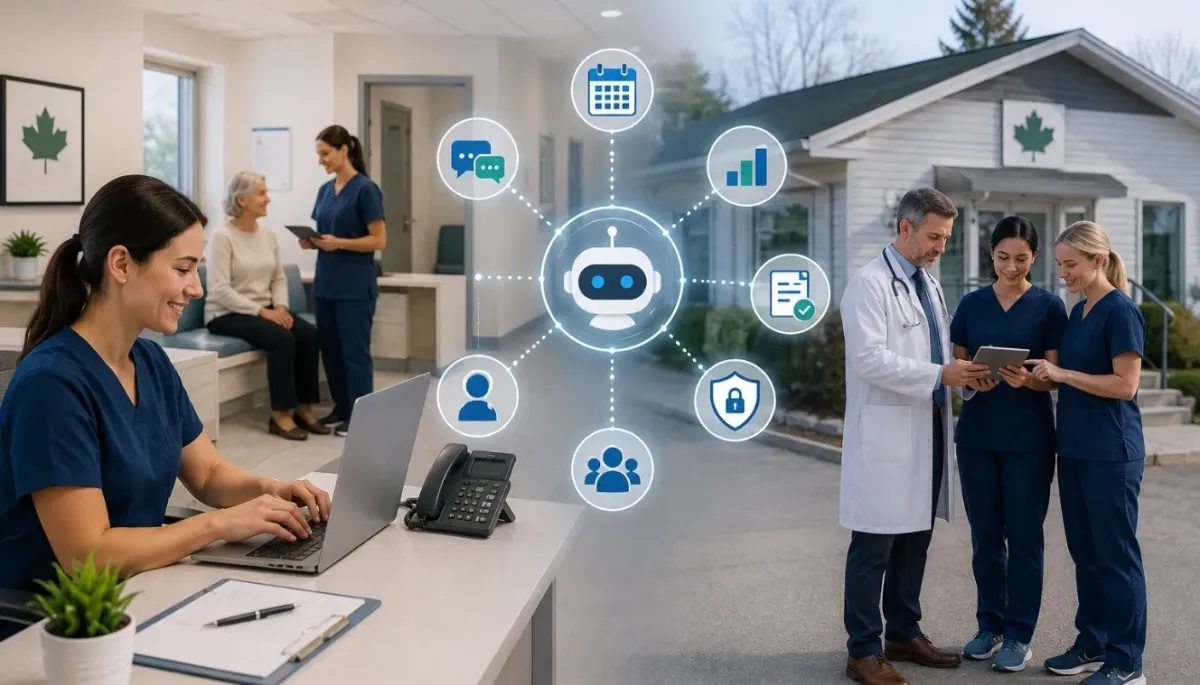
How Small Clinics in Canada Can Compete with Big Hospitals Using Automation
Introduction
Big hospitals have larger teams, bigger budgets, and stronger brand recognition. For many small clinics, competing with that can feel impossible. Patients often assume larger healthcare systems offer faster service, better technology, and more resources.
But bigger doesn’t always mean better.
Large hospitals often struggle with long wait times, slow communication, and impersonal patient experiences. Small clinics have an advantage hospitals can’t easily replicate: speed, flexibility, and personalized care. With the right automation tools, small clinics can scale those strengths without dramatically increasing overhead.
Why Big Hospitals Often Struggle With Patient Experience
Large healthcare systems manage thousands of patients, departments, and administrative processes.
That often creates friction.
Patients commonly deal with:
Long wait times
Delayed callbacks
Complicated scheduling systems
Long paperwork processes
Impersonal communication
Even though hospitals offer broad services, the patient experience can often feel frustrating.
This creates opportunities for smaller clinics.
Patients often prefer providers that offer faster service and better communication.
And small clinics can deliver exactly that.
How Automation Helps Small Clinics Compete
Automation helps smaller clinics operate like much larger organizations without hiring large teams.
Instead of adding more staff to handle repetitive work, clinics can automate tasks that consume valuable time.
That includes:
Appointment scheduling
Reminders
Patient follow-ups
Intake forms
Communication workflows
Review requests
This is why more providers across Canada are investing in digital healthcare solutions and healthcare workflow automation software to improve clinic efficiency.
Automation allows small clinics to stay lean while delivering a smoother patient experience.
And that can become a major competitive advantage.
1. Use AI Scribes to Reduce Administrative Work
Administrative work is one of the biggest hidden costs for small clinics.
Doctors often spend hours documenting appointments after clinic hours.
This leads to burnout and limits patient capacity.
AI scribes help solve this by automatically generating structured notes during appointments.
That means:
Less manual documentation
Fewer late-night charting sessions
More time with patients
Increased appointment capacity
For smaller clinics with limited staff, this can create immediate efficiency gains.
2. Offer 24/7 Appointment Booking
Patients expect convenience.
They don’t want to wait until your clinic opens to schedule an appointment.
Online booking allows patients to schedule appointments anytime.
This reduces:
Missed opportunities
Phone tag
Front desk workload
Online scheduling has become a priority feature for clinics in Canada looking for modern clinic management and practice management software.
When booking becomes easier, growth becomes easier too.
3. Automate Appointment Reminders and Follow-Ups
No-shows hurt small clinics far more than large hospitals.
A missed appointment can leave major gaps in your daily schedule and directly impact revenue.
Automated reminders help prevent that.
Clinics can automatically send:
Text reminders
Email reminders
Appointment confirmations
Follow-up messages
Patients can confirm, cancel, or reschedule before the appointment.
This keeps schedules full and reduces wasted time.Many clinics also use patient recall software to bring back inactive patients for recurring visits, annual checkups, and follow-up care.
4. Use AI Receptionists to Capture More Patients
Small clinics may not have large call center teams.
That doesn’t mean they need to miss patient opportunities.
Patients often call:
After work
During lunch breaks
Evenings
Weekends
If no one answers, they may move on to another clinic.
This is where an automated medical receptionist becomes valuable.
AI reception tools can:
answer calls
handle basic questions
schedule appointments
respond after hours
AI receptionist tools are becoming increasingly popular among healthcare clinics in Canada looking to improve patient accessibility.
5. Digitize Patient Intake
Paperwork slows everything down.
Long intake forms can frustrate patients and create bottlenecks at check-in.
Digital intake systems allow clinics to send forms before appointments.
Patients can complete:
Medical history forms
Intake documents
Consent forms
before arriving.
6. Build Stronger Patient Relationships Through Better Communication
This is where small clinics often outperform hospitals.
Patients value personal attention.
Automation helps clinics maintain that personal touch while scaling communication.
That can include:
Faster responses
Appointment updates
Follow-up messages
Live chat support
Many clinics in Canada now use secure live chat tools and healthcare CRM systems to improve patient communication and retention.
Better communication often leads to stronger retention.
7. Use Review Automation to Build Local Trust
Big hospitals often rely on established brand recognition.
Small clinics need trust signals.
Online reviews help build that trust quickly.
Automated review requests can help clinics consistently generate reviews without relying on staff to ask manually.
This supports stronger visibility and works well with healthcare reputation management software strategies.
A strong review profile can help smaller clinics compete with larger healthcare brands in local search results.
How HiClinic Helps Small Clinics Scale Without Hiring More Staff
Most small clinics don’t need massive teams.
They need smarter systems that help them operate efficiently.
That’s where HiClinic fits.
Instead of functioning like a traditional software platform that simply stores information, HiClinic helps clinics automate the communication tasks that often lead to lost revenue.
It helps clinics:
Instantly respond to missed calls through text
Automate appointment reminders
Bring inactive patients back with recall campaigns
Generate more patient reviews
Reduce front desk workload
Convert website visitors into appointments
This allows small clinics to compete with larger healthcare systems while maintaining a more personalized patient experience.
And that’s often where smaller clinics win.
Conclusion
Small clinics do not need hospital-sized budgets to grow.
They need speed, efficiency, and better patient communication.
Automation helps smaller clinics reduce administrative work, improve patient experiences, and compete with larger healthcare systems without burning out their staff.
The clinics that adopt smarter systems now will be better positioned to grow in the years ahead.
Disclaimer
Disclaimer: The content shared by HiClinic is intended for informational and educational purposes only. It is not medical advice, legal advice, or clinical guidance. HiClinic provides automation tools designed to improve patient communication, scheduling, retention, and operational workflows. Results may vary depending on clinic size, processes, and implementation.