

Why Clinics Need a Patient Tracking System to Improve Treatment Conversions
What Is a Patient Tracking System and How Does It Work?
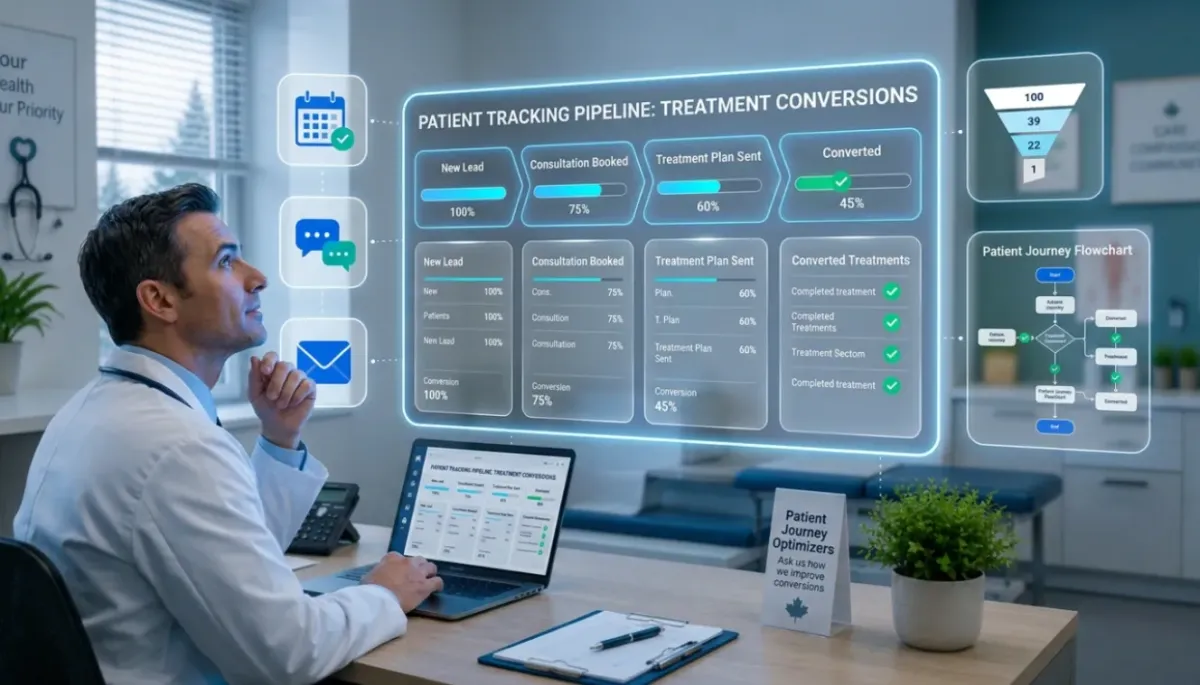
A patient tracking system is a digital tool that gives your entire clinic team a clear, shared view of every patient from the moment they make their first inquiry right through to their completed treatment and post-visit follow-up.
Think of it less like a medical records system and more like a smart, visual workflow manager for your patient relationships. It is a clinic conversion rate software designed to remove guesswork, eliminate manual tracking, and ensure nobody falls through the cracks.
Here is how a well-built patient tracking system works in practice:
New inquiry captured automatically. Whether a patient calls, fills out a contact form, sends a message through your website, or texts your clinic number, their information enters your pipeline instantly no manual logging, no sticky notes, no spreadsheet rows to fill in.
Pipeline stages update in real time. As a patient progresses from new inquiry to consultation booked, to treatment in progress, to follow-up scheduled, their stage in the pipeline updates automatically. Every team member, from the front desk to the treating practitioner, can see exactly where each patient stands without having to ask anyone.
Automated follow-ups go out at the right time The system sends personalised reminders, check-ins, and reactivation messages based on where each patient sits in the pipeline. A patient who booked a consultation gets a reminder before their appointment. A patient who attended but has not yet confirmed their treatment plan receives a timely nudge. One who has gone quiet for 60 days gets a reactivation message, all without anyone on your team having to remember to send it manually.
Reporting shows you where patients are dropping off. Instead of guessing why your conversion rate is lower than it should be, the system shows you exactly where in the journey patients stop engaging, and that data tells you what to fix.
HiClinic’s Patients Pipeline works on exactly this model, giving clinic teams a visual, organised view of every patient at every stage so your team always knows who needs attention, who needs a callback, and who is ready for their next appointment.
The Real Cost of Poor Patient Pipeline Management
Before we get into solutions, it is worth noting what happens when clinics lack a proper system.
When patient tracking runs on spreadsheets, notebooks, or nothing at all, these are the patterns that tend to emerge:
Patients who expressed a strong interest after a consultation are never contacted again because the front desk assumed someone else was handling it.
Weekend and evening inquiries pile up with no structured process to action them on Monday morning.
Patients who did not confirm their treatment plan are never followed up with because there is no system flagging them as outstanding.
Former patients who have not visited in several months are never reactivated because nobody knows who they are without manually digging through records.
Every one of these scenarios is a treatment that did not happen. In a competitive Canadian clinic market, that patient found another provider who made them feel remembered and prioritised.
A reliable clinic follow-up system removes the reliance on individual memory and replaces it with a structured, automated process that runs consistently even on the days when your team is stretched thin.
To understand how much this matters in practice, explore how patient follow-up automation can fundamentally change the way your clinic manages patient engagement after every visit.
Part 1: Patient Conversion Strategies Turning Inquiries Into Booked Treatments
How a Patient Tracking System Improves Treatment Conversion Rates
The journey from “interested” to “booked” to “treated” involves multiple touchpoints, and each one is an opportunity to either keep a patient moving forward or lose them to inaction. A patient tracking system makes sure your clinic is consistently doing the former.
Speed to first response matters more than most clinics realise
Research consistently shows that the faster a clinic responds to an initial inquiry, the higher the likelihood of that patient booking. When someone reaches out and hears nothing for 24 hours, they assume you are too busy or simply do not care.
This is especially true for missed calls. A patient who calls and reaches voicemail may not call back. But if they receive an automatic text within minutes, letting them know you received their call and will be in touch shortly, that trust is preserved.
HiClinic’s Auto Missed Call Text Back handles this automatically, so no missed call is ever left unanswered. Combine this with an AI Receptionist that can respond to inquiries and handle booking requests around the clock, and your clinic becomes highly responsive without adding to your team’s workload. If you are weighing up whether that investment makes sense, this comparison between an AI receptionist and a human receptionist is worth reading.
Visibility into where patients are dropping off
One of the most powerful aspects of medical practice lead tracking is understanding exactly where in the journey patients are not converting. Is it after the first call? After the consultation? When treatment costs are discussed?
Without a visual pipeline, this data is invisible. You know your conversion rate feels low, but you cannot pinpoint why. With a structured tracking system, you can see at a glance that a specific stage has a high drop-off rate, and take deliberate action to address it. HiClinic’s Reporting Dashboard gives you exactly this visibility in real time.
Personalised, timely follow-up sequences
Generic messages do not move patients to action. A tracking system allows your clinic to segment patients by treatment type, inquiry date, or engagement level and send follow-ups that feel relevant.
This is where an automated follow-up system for medical patients earns its real value. Instead of a blanket “just checking in” message, a patient who asked about orthodontic treatment receives a follow-up specifically about that service, with an easy link to book a consultation. The right message at the right time dramatically increases the likelihood of conversion.
Re-engaging patients who went quiet
Every clinic has a segment of patients who showed strong interest, came in for a consultation, and then disappeared. Without a tracking system, these patients are invisible. With one, they are a targetable, recoverable opportunity.
An automated patient recall process can identify patients who have not engaged in 30, 60, or 90 days and send them a personalised re-engagement message, a check-in, a relevant offer, or simply a reminder that your team is available when they are ready.
HiClinic’s Patient Recall tool is built specifically for this, helping clinics win back patients who are still interested but need a nudge to re-engage. This is one of the highest-return capabilities in any patient pipeline management system because the cost of reactivating a former patient is almost always lower than acquiring a new one.
Part 2: Patient Follow-Up Quality and Care Experience — Why Organisation Directly Affects Care
Why Are Patient Follow-Up Systems Important Beyond Just Administration?
It is easy to frame patient tracking as purely an administrative tool. But how organised and consistent your follow-up process is directly affects the experience your patients have and whether they feel cared for, or just processed.
When a patient completes a procedure and receives no follow-up message, no check-in call, and no reminder about their next appointment, they do not just feel forgotten; they question whether the clinic actually cares about their outcome. That perception drives both patient retention and online reputation.
A structured follow-up process signals to every patient: we see you, we are keeping track, and we are here when you need us next.
Benefits of Patient Tracking for Follow-Up Quality and Retention
Consistent communication at every stage, from the first inquiry to the final appointment, a tracking system ensures that every patient receives timely, relevant communication without your team having to manually manage hundreds of individual follow-up actions. Every stage of the pipeline has defined next steps, and the system executes them automatically.
Better coordination across your clinic team.When all patient information and status updates live in one shared pipeline, your front desk, coordinators, and treating staff are always on the same page. There is no “I thought you were handling that.” Everyone can see the latest status for every patient in real time.
All patient communication texts, emails, calls, and online messages flow into a single place, too. HiClinic’s Unified Inbox ensures that no message from any channel is ever missed or sits unread in a separate platform.
Stronger patient retention through proactive engagement. Patients who feel followed up with consistently are patients who return. A tracking system that automatically schedules recall messages, post-treatment check-ins, and seasonal campaigns keeps your clinic top of mind, turning one-time patients into long-term relationships.
Reliable appointment management. When patients are in your pipeline, their appointments are visible and trackable. Automated reminders reduce no-shows, and when a patient misses an appointment, the system can flag them for a follow-up rather than letting the gap go unnoticed. For more on managing this specific challenge, our guide on how to reduce patient no-shows is essential reading.
Online reputation is a downstream benefit.Patients who feel well cared for and consistently followed up with are far more likely to leave a positive review. A patient tracking system that includes post-treatment follow-up automation creates natural, low-friction opportunities to invite feedback at the right moment.
HiClinic’s Reputation Management feature integrates with the pipeline to make this process seamless. For a practical guide on doing this well, explore how to get more clinic reviews using automation.
Key Features to Look for in a Patient Tracking System for Your Clinic
When evaluating a patient tracking system for clinics, prioritise these capabilities:
Visual patient pipeline with customisable stages. Look for a system that lets you define your own stages from new inquiry to consultation booked, treatment in progress, and post-care follow-up, and visualise every patient across those stages in a single view. This is the operational backbone of the entire system.
Automated follow-up and recall messaging. The system should handle follow-up communication automatically based on rules you set, so patients at every stage are being engaged without your team having to manually schedule individual outreach.
Missed call recovery: Every missed call is a potential patient. A system that automatically sends a text response when a call goes unanswered keeps that inquiry alive and in your pipeline rather than lost to a competitor.
Unified communication inbox: All patient conversations across SMS, email, and other channels should flow into a single inbox so your team never has to toggle between platforms or miss a message because it arrived through the wrong channel.
Reporting and pipeline analytics.Without data, you are managing by instinct. Look for a system that shows you conversion rates by stage, follow-up response rates, and which patient segments are engaging most strongly, so you can make decisions grounded in actual performance.
Booking calendar integration. Patients should be able to book appointments directly, and those bookings should update the pipeline automatically. HiClinic’s Booking Calendar is built for exactly this, removing friction from the scheduling process for both patients and staff.
Ease of adoption for clinic teams. A system that is too complex to use consistently will not get used. Prioritise platforms designed specifically for healthcare environments, ones that front desk staff, coordinators, and practitioners can all use confidently from day one.
The Impact of a Patient Tracking System on Clinic Revenue
The connection between a proper patient pipeline management system and improved clinic revenue is direct and measurable.
Here is the straightforward financial logic:
Every missed follow-up is a potential treatment that did not happen. Every patient who goes quiet without anyone noticing is revenue that walked out the door. Every reporting blind spot is a bottleneck you cannot fix because you cannot see it.
When you put a tracking system in place, even modest improvements in follow-up consistency produce meaningful results. If your clinic is currently following up with 40% of post-consultation patients and a system takes that to 80%, the additional treatments that result from that improvement go straight to your revenue line without any new marketing spend.
The impact of CRM on medical clinic revenue is particularly strong when the system combines pipeline tracking with automated patient recall, because reactivating former patients is almost always more cost-effective than acquiring new ones.
For clinics wanting to understand the full landscape, our guides on the best healthcare CRM software for patient management in 2026 is worth reviewing.
Common Challenges When Implementing a Patient Tracking System
Getting a new system in place takes some planning. Here are the most common challenges and how to approach them:
Staff adoption. The biggest risk with any new system is that the team reverts to old habits after the first few weeks. Choose a platform with an intuitive interface that requires minimal training. Involve your front desk and coordinators in the setup process so they feel ownership over how it works. HiClinic is designed specifically for busy clinic teams, not technical users, so the learning curve is short and the daily use is straightforward.
Getting your pipeline stages right. It is tempting to over-engineer your pipeline with too many stages at the start. Begin simply with three to five clear stages that reflect how your clinic actually moves patients through the journey, and refine from there as your team gets comfortable.
Keeping automation human: Automation works best when it feels personal. Poorly timed or overly generic messages can do more harm than good. Take the time to craft follow-up messages that sound like they come from your clinic, warm, clear, and relevant to where the patient is in their journey.
Consistency of use: A pipeline is only as useful as the information in it. Set a team expectation that every new inquiry goes into the system, every stage update is made promptly, and the pipeline is reviewed as part of the weekly clinic routine.
For smaller practices just getting started with automation, our guide on small clinic automation is a practical first read.
Best Practices for Using a Patient Tracking System Effectively
Define your pipeline stages before you start. Know exactly what each stage means for your clinic and what action is required at each one before you begin adding patients.
Assign clear ownership. Every stage should have a designated person or role responsible for moving patients forward. Ambiguity leads to inaction.
Review your pipeline as a weekly team habit. Fifteen minutes reviewing who is stuck, who needs a follow-up, and who is ready for their next step keeps the entire system functioning at full effectiveness.
Use your reporting data to improve. If a particular stage has a consistently high drop-off rate, that is the signal to look at your follow-up timing, message content, or the conversation happening at that stage.
Let automation handle volume; keep humans for moments that matter. Automated reminders and check-ins are perfect for routine touchpoints. Personal calls or tailored messages are best for sensitive conversations or patients who need extra care.
Conclusion: Stop Losing Patients to Disorganisation
The clinics that grow steadily in Canada’s competitive healthcare market are not always the ones with the biggest marketing budgets or the most advanced treatments. Often, they are the ones with the most organised, consistent patient follow-up processes, the ones that respond quickly, track every inquiry, and never let a patient feel forgotten.
A proper patient tracking system for clinics makes that consistency possible at scale. It brings order to the patient journey, gives every team member clarity on what to do next, and ensures that every inquiry, from the first missed call to the final post-treatment check-in, is managed to the same standard of care.
HiClinic is purpose-built for Canadian clinics that want to run a tighter, smarter operation. With tools for visual patient pipeline management, automated follow-ups, missed call recovery, patient recall, AI-assisted reception, reputation management, and real-time reporting all in one platform, it gives your team everything needed to convert more inquiries into completed treatments and turn one-time patients into long-term relationships.
Ready to see it in action?
Book a free 15-minute intro call and find out how HiClinic can work for your clinic.
Disclaimer
Disclaimer: The content shared by HiClinic is intended for informational and educational purposes only. It is not medical advice, legal advice, or clinical guidance. HiClinic provides automation tools designed to improve patient communication, scheduling, retention, and operational workflows. Results may vary depending on clinic size, processes, and implementation.